Guide · Crescent Moon Shibas
By Him, Out of Her
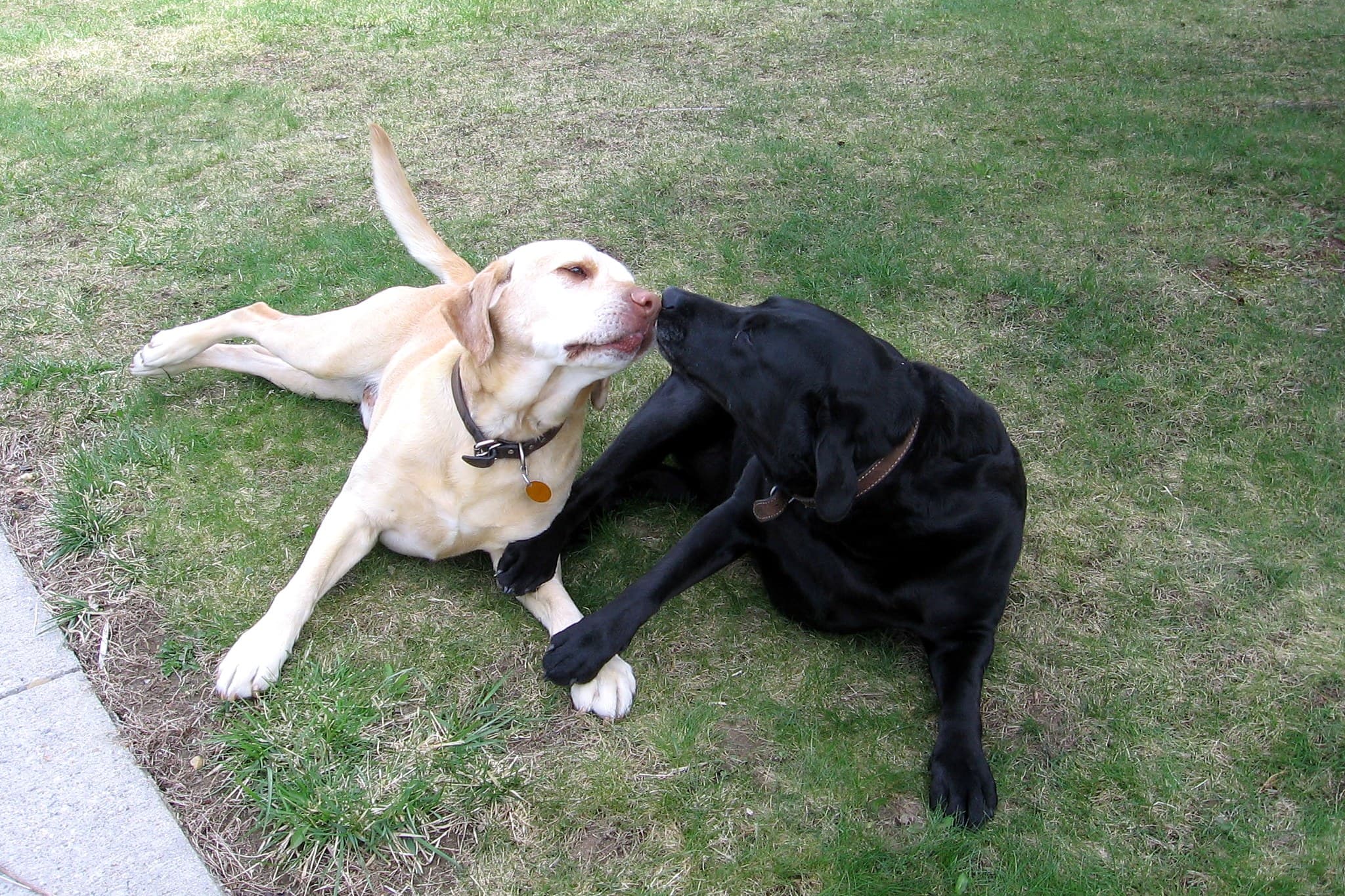
A stud dog gets interviewed before a breeding and the bitch gets a pass because she lives here. The same checklist belongs on both sides: pedigree, structure, temperament, health testing, what each dog brings to this cross, and the questions a puppy buyer should ask about both parents.
First, the words
A litter is by the sire and out of the dam. That describes what happened. The sire contributed half the chromosomes in a few minutes. The dam contributed the other half and then carried, whelped, cleaned and fed the result until it could leave her. The American Kennel Club's registration glossary keeps it plain: the sire is "the male parent of a dog," the dam is "the female parent of a dog," and a litter is "the puppy or puppies of one whelping" [1]. Under AKC rules the breeder is not the owner of the stud, unless that person also owns or leases the dam. The breeder is "the owner, or the lessee, of the dam on the date of a mating that results in a litter" [1].
So a stud does not produce puppies. He sires them. The AKC glossary defines get, simply, as "offspring" [2], and a breeder speaks of a bitch's produce. The litter comes out of her. Write it the other way round and an experienced breeder reading your website will quietly adjust their opinion of everything else on the page.
That is the small point. The larger one follows from it.
The interview only one dog gets
Anyone who has stood a stud dog knows the questionnaire. What are his clearances? Where did he finish? Who is behind him? How is he with strange dogs, with children, in a crowd? What have his puppies done? Every one of those questions is fair. A bitch owner who does not ask them is not doing the job.
What is odd is how often the same conversation goes silent when it turns around. The male has to justify himself. The female is in the whelping box because she lives here. "She is a wonderful family dog." "We would like to keep one back." "Everyone who meets her loves her." Those are reasons to keep a dog. They are not reasons to make more of her.
The AKC's guide to responsible breeding has a name for the blind spot: kennel blindness. It asks breeders to "take a step back and honestly evaluate the good and bad points of their dogs before making the decision to breed," and then to "look for a mate that will eliminate or balance those flaws" [3]. The order matters. You cannot balance a flaw you have not admitted to.
The standard is not "is this dog good enough to be bred to." The standard is "would I ask these questions of someone else's dog, and can my own dog answer them." If the answer is yes on one side of the contract and a shrug on the other, the problem is not the stud.
The same list, both columns
Write the stud's checklist down, then put the bitch's name over the second column. The list does not change.
| What you ask about him | What you owe about her |
|---|---|
| Pedigree: who is behind him, what did they produce, what did they die of | The same three questions, three generations deep |
| Structure against the breed standard, hands on, not from a photo | The same, with the faults named out loud |
| Temperament away from home, with strange dogs and strange people | The same, and not "she is fine with us" |
| Health screening on the parent club's list, with results you can look up | The same list, the same results, the same lookup |
| A record of some kind: ring, field, working, therapy, or a trainer who will vouch | The same, or an honest account of why not |
| What his get are like, if he has any | What her produce are like, if she has any |
An empty row in either column is not a reason to stop. It is a row to fill before the breeding.
What does this dog bring?
Accomplishments are evidence, and useful evidence, because they are hard to fake. But a breeding decision is about the dog, not the paperwork. The question that decides whether a litter improves anything is this: what does this particular animal bring to this particular cross, and what does it lack?
Ask it of both of them.
Structure. What is correct, in the plain words of the standard, and what is faulty. Then the harder question: is the fault one the breed is already fighting? A slightly long loin on a dog in a breed full of long loins is a different problem from the same loin in a breed where it is rare. The AKC guide warns against choosing a mating pair "solely on the basis of the dog's or bitch's looks" and tells breeders that "it is essential to study the pedigrees of your mating pair" [3], because what you see in front of you came from somewhere, and so will what you get.
Temperament. Stable, recovers from a startle, settles in a new place, tolerant of handling by a stranger, sensible with other dogs. "Great with the kids at home" is a fact about the home. Take the dog somewhere it has never been and watch.
Attitude and character. This is the part that rarely makes it onto a pedigree and shows up in every puppy. Drive, or the absence of it. Biddability. Resilience when something goes wrong. Whether the dog wants to work with a person or merely tolerates one. The ring tests some of this; the field, the trail, a busy sidewalk and a vet's table test the rest. Decide whether this is a quality you want doubled, because that is what a breeding does.
Type. The AKC glossary calls it the "sum of qualities that distinguish dogs of one breed" from others [2]: expression, outline, the way the dog moves when nobody is stacking it, the things only someone who knows the breed can judge. A dog can be sound and still not look like its breed. A breeder who cannot see type in their own dog should find a judge or a mentor who can, before the breeding.
Health in the line, not just the individual. A dog's own clearances tell you about that dog. Its littermates, its parents and its grandparents tell you what it is likely to pass on. The AKC guide says it directly: everything about the prospective puppies' "health, soundness, looks, and temperament will be determined by the genes passed on by their parents, and by their parents before them" [3].
And the other half of the ledger. What does this dog not have? Every honest breeder can name at least one thing in every dog they own, including the one with the ribbons. The whole point of choosing a mate is to complement a weakness. A breeder who cannot name one in their own bitch has not looked, and a stud owner who cannot name one in their dog is selling, not breeding.
A ribbon is not a producing record
A show record means something. Behind every championship there is conditioning, training, entries, travel and more than one judge's hands on the dog. Nobody should wave that away. But winning and producing are two different accomplishments, and one does not guarantee the other. A champion earns the title with fifteen points, including two major wins under two different judges and further points under a third [4]. That measures the dog against the dogs that showed up on those days. It says nothing directly about what the dog passes on.
Dog shows themselves acknowledge the difference. The Stud Dog and Brood Bitch classes, non-regular classes usually offered at specialties, are the only classes where the parent in the ring is not the one being judged. The AKC's guidelines for conformation judges put it plainly: "the merits of the Stud Dog and Brood Bitch are not considered in the placement of the entry. It is the quality of the get that forms the basis for the judge's decision." The parent is examined only for a condition that would disqualify or excuse it [2, 5]. The sport built a class around the idea that a producer is judged by the puppies.
The reverse holds as well. There are excellent dogs whose owners never had the budget to campaign them. Entries, conditioning and a handler on the road are expensive, and a dog without a Best in Show is not thereby a dog without breeding value. That applies to bitches and dogs alike. An unshown female can absolutely be worth breeding. So can an unshown male. What neither of them can offer as a credential is "I own it."
Testing goes both ways
Here is a conversation stud owners have more often than they would like. A bitch owner asks, correctly, for every clearance on the male: hips, elbows, eyes, heart, patellas, whatever the parent club lists. The results come back. Then the stud owner asks for hers, and the answer is "all her babies have been fine," or "she has never had a problem."
Neither of those is a test result. The whole reason screening exists is that a dog can look fine, feel fine and still carry something.
The standard is symmetric and it is not hard to meet. The Orthopedic Foundation for Animals keeps a searchable public database. Every dog that has had an OFA screening with normal results since 1974 is in it, and dogs with abnormal results appear when the owner authorized disclosure [6]. The OFA's own guidance is that if a dog is not listed, "it is fair to assume that the dog has not been screened for genetic disease by the OFA, or had abnormal results" [6]. The list of what to test is set with each parent club, and a dog that completes the list with results released to the public earns a CHIC number. Read that number carefully. The OFA is explicit that "the CHIC number itself does not imply normal test results." It shows the tests were done and the results are visible [7]. That visibility is the point. Anyone can look up his, if the results were released. Anyone can look up hers.
The AKC's Breeder of Merit program asks breeders to certify that the parent club's recommended health tests "are performed on your breeding stock," and its advanced levels require "proof of Parent Club-required health testing on sires and dams of litters" [8]. Sires and dams. If you are going to ask the stud owner to prove it, be ready to pull up the same page for your girl before you send the email.
Before there is a litter in the whelping box
The right stud does not erase what you do not like about her. He can balance it, if you chose him for that reason and if the pedigree behind him agrees. He cannot fix it, and he cannot fix anything you have not named. Every one of these should have a real answer, written down, in words you would be willing to say to a buyer:
- What does she bring? Three specific things, in the language of the standard and the language of temperament.
- What does she lack? At least one thing. If you cannot think of one, ask someone who does not love her.
- What does he bring, and what does he lack? The same exercise, with the same honesty, whether you own him or are paying for him.
- Why this stud for this bitch? Not "he is available" or "he is a champion." What in him complements what in her, and what in his pedigree backs that up?
- What does the goal puppy look like? Structure, temperament, purpose. If you cannot describe it you cannot tell whether you got it.
- Who wants that puppy, and have you talked to them?
- What will you do with the puppies that are not the goal puppy? There will be some.
Those questions deserve answers while the answers can still change the decision. They apply to the stud owner and the bitch owner equally, and to the breeder who owns both and has nobody to interview but themselves.
For the buyer: the same questions, asked kindly
If you are looking for a puppy rather than planning a litter, everything above is yours to use. You do not need to know the breed standard. You need to ask two questions and pay attention to how the answers are built.
"What did the sire bring to this breeding, and what did the dam bring?" A thoughtful breeder answers in specifics, and the answer will have a weakness in it somewhere, because every honest answer does. "He has the front she needed and a steadier temperament; she brings type and a head I would not trade." Listen for the dam getting the same quality of answer as the sire. If the stud gets three sentences and the dam gets "she's our sweetheart," that tells you how the decision was made.
"Can I see the health results for both parents?" Not a promise, and not "there has never been a problem in the line." Results, on the parent club's list, with a registered name you can type into the OFA database yourself [6]. A breeder who has done the work will be glad you asked, because it is the one question that separates them from everyone who did not.
If either question gets a defensive answer, you have not insulted anyone. You have asked what the breeder should have asked themselves.
Sources
- American Kennel Club, "Online Litter Registration Glossary." https://www.apps.akc.org/apps/litters/support/support_glossary.cfm
- American Kennel Club, "Glossary" (Get, Type, Stud Dog Class, Brood Bitch Class). https://www.akc.org/about/glossary/
- American Kennel Club, "AKC's Guide to Responsible Dog Breeding." https://www.akc.org/dog-breeders/breeder-education/guide-to-breeding/
- American Kennel Club, "Rules Applying to Dog Shows," Chapter 16, Section 4 (Champion of Record). https://images.akc.org/pdf/rulebooks/RREGS3.pdf
- American Kennel Club, "Rules, Policies and Guidelines for Conformation Dog Show Judges," Stud Dog and Brood Bitch. https://images.akc.org/pdf/rulebooks/REJ999.pdf
- Orthopedic Foundation for Animals, "Diseases in Dogs." https://ofa.org/diseases/
- Orthopedic Foundation for Animals, "CHIC Programs." https://ofa.org/chic-programs/
- American Kennel Club, "Breeder of Merit Requirements." https://www.akc.org/breeder-programs/akc-breeder-of-merit-program/breeder-of-merit-requirements/
Photo: "Two Labrador Retrievers" by Bulaclac Paruparu, CC BY 2.0, via Wikimedia Commons.